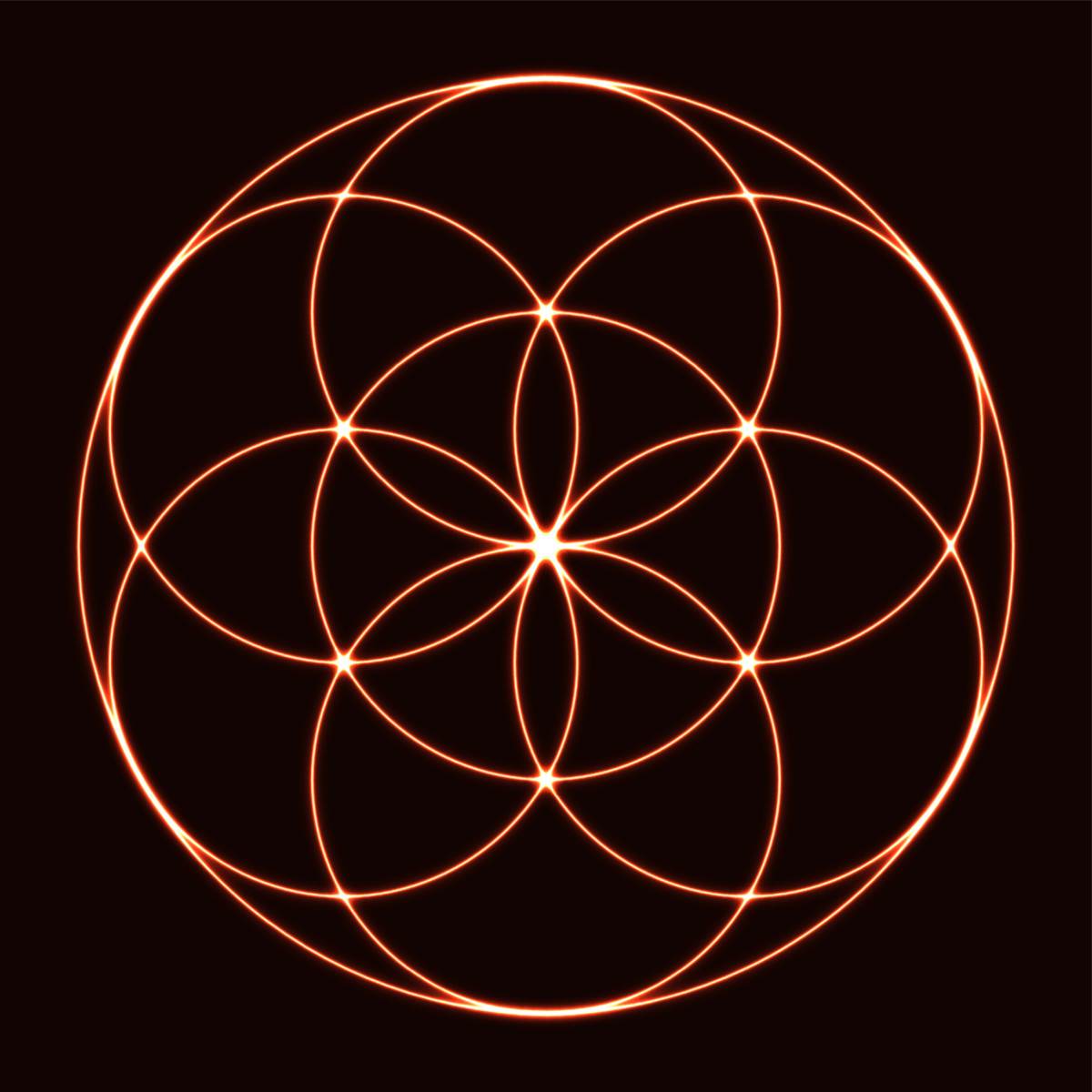
Sacred geometry refers to the belief that certain geometric shapes and proportions have spiritual or symbolic significance. This concept is found in various cultures and traditions around the world, often linked to the idea that the universe is governed by specific patterns and mathematical principles.
Some key aspects of sacred geometry include:
- Shapes and Symbols: Certain shapes such as the circle, square, triangle, and various polygons are considered sacred. Symbols like the Flower of Life, the Seed of Life, and the Metatron’s Cube are often associated with sacred geometry.
- Proportions and Ratios: The golden ratio (approximately 1.618) and the Fibonacci sequence are frequently cited in sacred geometry. These ratios are believed to be fundamental to the structure of the universe and are seen in natural forms like shells, flowers, and even galaxies.
- Architecture and Art: Sacred geometry is often incorporated into religious and spiritual architecture, such as the design of temples, churches, mosques, and other sacred spaces. Art and mandalas are also common ways to express these geometric principles.
- Spiritual and Philosophical Significance: Many believe that understanding and meditating on these geometric patterns can lead to spiritual insights and a deeper connection to the divine or the cosmos. Sacred geometry is often linked to concepts of unity, balance, and harmony.
Overall, sacred geometry is about finding a deeper meaning in the shapes and patterns that form the foundation of existence, seeing the universe not just as random but as a harmonious and purposeful design.
